Composting Food Waste at Your Institution: Why It's Not a Garden Project
A note for schools, camps, and organizations considering on-site composting
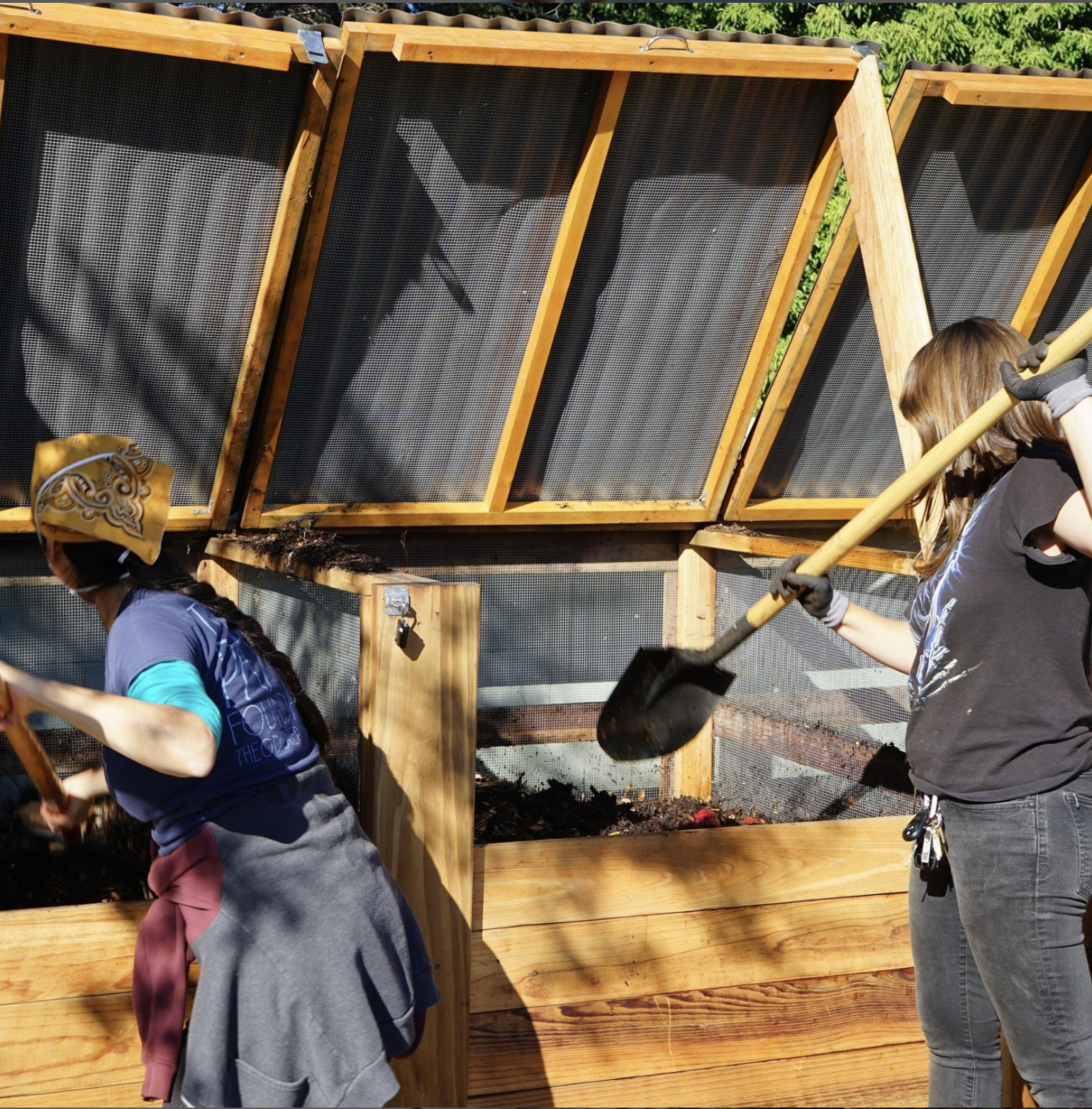
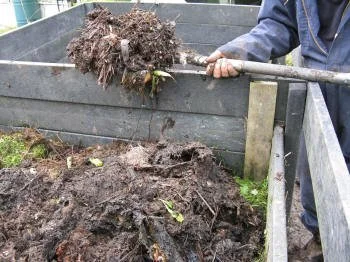
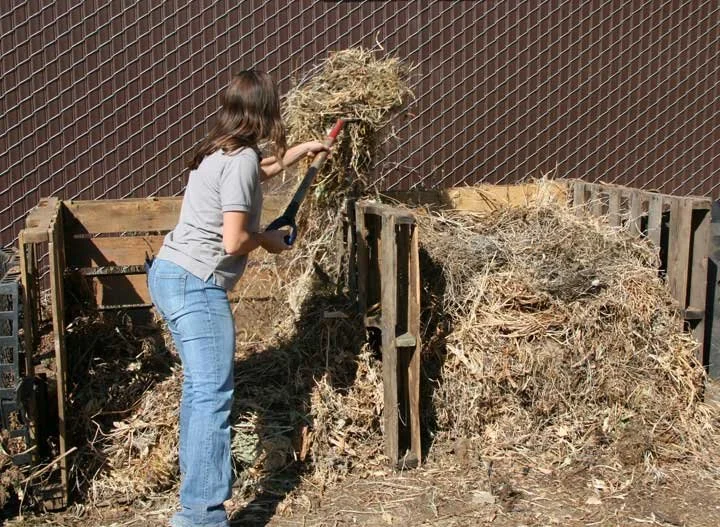
Two very different activities share the same name, and most of the confusion in this field comes from that fact.
The first is a compost bin in the corner of a garden, taking in leaves, weeds, and trimmings. It is a fine thing. It teaches children where soil comes from. It costs almost nothing, it fails gracefully, and when it is neglected for a summer the worst outcome is a pile of dry sticks.
The second is the on-site processing of an institution's food waste — the output of a commercial kitchen, a dining hall, a camp, a school cafeteria. Thousands of pounds a year. That is not gardening. It is waste management infrastructure that happens to be located on the property, and it behaves according to entirely different rules.
Both are called composting. Only one of them can fail in a way that brings enforcement to a campus, or arrives as a complaint from the neighbors, or becomes the thing a community remembers about sustainability for the next ten years.
No one is checking until something goes wrong
Composting at institutional volume is regulated activity in California. Most organizations operating at modest scale fall below the thresholds that trigger solid waste facility permitting, and this is easy to read as an absence of oversight.
It isn't quite that. Falling below a permitting threshold exempts the operation from a permit. It does not exempt the operation from nuisance law, vector control authority, or local health enforcement, all of which act on complaints, at any scale, at any time. In practice this means no one reviews a compost program until something has already gone wrong — and that the first outside assessment of a compost operation usually arrives in the form of a complaint about it.
That matters more than it might appear, because of how these compost systems fail.
The natural assumption is that a struggling compost system announces itself. It generally doesn't. The failure modes are well documented, and every one of them arrives late:
Animals find it. Rodents, raccoons, skunks, and coyotes don't appear when a system first goes wrong. They appear once conditions have persisted long enough to establish a reliable food source. By the time there's an animal problem, there has been an operational problem for weeks.
Flies move in. Larval cycles run on their own schedule. Visible adult flies mean the underlying condition was established well before anyone could have noticed.
It starts to smell. Odor is the complaint that reaches administrators, but it's a lagging indicator. The conditions producing it were present long before anything was noticeable from the parking lot.
The pile has to get hot enough — and stay hot. Killing off harmful pathogens depends on the material reaching a high enough temperature and holding it long enough. Most institutional programs have no way to show this happened — no thermometer, no log, no record. If a health department or a parent asks whether the finished compost was safe to handle, the honest answer is usually that nobody knows. It's the most common gap in the field, and the hardest one to see.
People stop keeping up with it. This ends more compost programs than any biological factor. A system that needs sustained weekly physical work from staff who already have full jobs tends to get maintained enthusiastically for a season, on and off for another, and then not at all. This isn't a failure of commitment — it's what happens to any recurring task that sits outside someone's actual role. The food waste, meanwhile, keeps arriving.
None of this is exotic. It's the ordinary behavior of decomposing organic matter at volume, and it's roughly what institutions are sensing when they decide not to take this on.
Plenty of composting guides exist
There's a persistent hope that the barrier here is a missing set of instructions — that institutions don't compost because no one has written down clearly enough how to do it.
The evidence points elsewhere. Composting is among the most thoroughly documented practices in waste management. Municipalities publish guides. University extension programs have produced them for decades. Community garden networks, environmental nonprofits, county agencies, and state waste authorities have all written manuals, and nearly all of it is free and available in a single search. There is no shortage of written instruction in this field, and there hasn't been for a very long time.
And almost no institution composts its food waste on site.
Not because they tried and it went badly. Most never attempt it. Ask a school or a religious organization or a camp why they aren't composting their kitchen waste, and the answer is never that they couldn't find instructions. It's that thousands of pounds of food waste is obviously not something they can take on — and that read is accurate. It's the sound judgment of people who understand their own operational capacity — and who know this work would fall to staff and volunteers who already have full plates.
There's nothing to apologize for in that. No one treats it as a failing that a school doesn't run its own landfill or operate its own water treatment — waste handling at volume is infrastructure, and organizations rely on professionals for it. On-site composting is the same kind of decision. The reason it has almost always meant trucking food waste away is that on-campus processing at real volume hasn't been a genuine option — not that handling it on site is somehow beyond what a school could ever do. With the right system and the right oversight, it is very much within reach. It simply belongs in the category of infrastructure, run by someone whose work it is, rather than a garden project run on goodwill.
When a program does get tried, here's what happens
The compost programs that do get attempted are usually the small ones: a plastic compost bin behind the garden, some trimmings, a few apple cores and banana peels, a motivated teacher. These rarely fail in any way anyone registers, because nothing was riding on them. The compost bin gets used for a season, then less, then not at all, and no one marks the date it stopped — there was no diversion figure to fall, no material backing up, no complaint. It was over in the corner.
None of this means anyone did something wrong. What usually happens is simpler: the compost bin gets less attention as the school year fills up, and eventually none, and because nothing depended on it, no one notices. A compost bin that a teacher keeps up with, year after year, genuinely teaches something: kids watch scraps turn into soil and learn where food goes. A compost bin that starts with enthusiasm and quietly lapses teaches something narrower, and children tend to notice: that this kind of effort is something you do for a while, and that nothing much depends on whether you continue. Meanwhile the cafeteria's food waste has been going out with the trash the whole time. A school with a compost bin like this hasn't taken a first step toward handling its food waste. It's done a different thing that shares the name.
There's a further cost, and it compounds. When a food waste program runs intermittently or quietly dies, people stop trusting it — and a program no one trusts is one no one bothers to sort for. The scraps get tossed in the trash again, because everyone quietly assumes the composting isn't really happening, the same way most people assume the plastic in the blue bin isn't really being recycled. Once that belief sets in, it's very hard to reverse. The program can be running perfectly and people will still throw their food waste away, because they've learned not to believe in it.
So the gap isn't an information gap. What exists is a large number of symbolic compost bins and a very small number of real operations.
The trap in the middle
There's also a middle, and it's worth acknowledging, because it's where well-intentioned programs most often stall. It usually looks like a scaled-up bin: a three-bay system or a row of tumblers, taking kitchen prep scraps but not plate waste, vegetative material but not meat or dairy. On paper it's the sensible intermediate step. In practice it tends to combine the harder properties of both ends. It generates real, sustained physical labor while diverting a fraction small enough that it's difficult to point to a number justifying it. It depends on sorting, which is a lot to ask of a lunchroom, and it comes apart when sorting slips. And because it's handling food, it carries the risk profile of an operation while producing the results of a demonstration.
That middle setup — usually a three-bay bin system, sometimes a set of tumblers — is the most common recommendation in the composting guides, and the most common thing an institution attempts when it decides to get serious. It's also, often, what convinces a school that composting doesn't work.
Why more instructions won't close the gap
Guidance has been abundant and free for decades and hasn't changed any of this, because the obstacle was never that nobody knew the steps.
Composting at scale is a read-and-respond skill. Fixed steps get you competent operation under expected conditions. What protocols can't teach is the pattern recognition to read conditions that are drifting, in a season you haven't seen yet, on a site with its own exposure and drainage and heat. That kind of knowledge is built over years of making compost, observing how it behaves, and working with it directly — learning the patterns where there are patterns, and developing judgment for the many situations where there aren't. Instructions support it. They have never replaced it.
There's a corollary here that runs against intuition. A well-run compost operation looks easy. That's what competent design produces: the difficulty is absorbed in advance, by whoever built the system, so that the person doing the daily work is executing rather than diagnosing. The ease is real. It's also manufactured. It isn't evidence that the underlying process is forgiving — it's evidence that someone has made a volatile process behave predictably and is still watching it do so.
This is the easiest thing to misread. A compost program that has run smoothly for two years doesn't show that composting at scale is simple. It shows that the design is holding. Those are different claims, and only one of them survives the removal of the expertise that produced it.
The turnover problem
Then there's a problem every institution will recognize, because it governs every other program they run: turnover.
Suppose one motivated teacher learns a system thoroughly over a year, and then leaves — for another school, another role, another city. She has two weeks to hand off. What she transmits is a compressed version of what she knew. Her successor transmits a compressed version of that. Within a few cycles, the practice being performed on campus is several generations removed from the original, and no one involved can tell, because each handoff felt complete to the person making it.
This isn't a knock on teachers. A math teacher can hand a course to the next math teacher without much lost, because teaching math is the job — it's their training and their daily work, and the new hire arrives with the same foundation. Composting is different. It's a specialized craft that happens to have landed on someone whose real expertise is chemistry, or third grade, or running the cafeteria. They may do it well, but it was never their field, and there's no next-in-line who trained for it. This is how specialized practice always moves across institutional handoffs — and it's why organizations retain professionals for functions that carry consequences, rather than training one person and hoping the knowledge survives.
A manual is a one-time transfer to a person who won't be there in three years. The material will still be arriving.
What a responsible compost program has
For an organization that does decide to process real food waste on site, these are the working specifications. They're worth holding any proposed system against, including one built in-house.
Traceable, uncontaminated carbon inputs. Carbon material from a known point of origin, confirmed free of herbicide and pesticide residue. This material will be handled by children and will end up in soil where food grows.
Genuinely pest-proof containment. Sealed against animals large and small — not covered or mostly closed. A compost area is investigated nightly by animals that are very good at finding food.
A pile that reliably gets hot enough, with records to prove it. Temperatures high enough to kill pathogens, held long enough to do the job, measured and written down. Without a temperature log, safety can't be demonstrated.
No standing odor and no fly breeding. These aren't unavoidable costs of composting. They're indicators, and treating them as normal is how a compost program drifts toward a complaint.
A labor load that will still be performed in year three. The planning question isn't what people will agree to at launch; it's what the role can carry once it's routine.
Ongoing oversight by someone with genuine expertise at this scale.
That last one is worth defining, because expert covers a lot of ground in this field. The relevant expertise isn't knowing how to make good compost under good conditions — many people can do that, and a home composting background is real, but it's a different thing. What matters is volume, material, and failure. Someone who has processed thousands of pounds of post-consumer food waste, repeatedly, in settings with no tolerance for odor or pests, has necessarily watched systems drift and had to correct them. That accumulated failure knowledge is the whole asset. It's what lets a small deviation get caught in week one rather than diagnosed in week six by a health inspector.
Availability matters too. Expertise that trained a staff two years ago and is no longer reachable isn't oversight. It's a past event.
Two honest options
Institutions asking about composting usually have one of two things in mind, and it helps to be clear about which.
If the goal is educational — a compost bin, a garden, a class that learns what decomposition is — then building exactly that makes sense, kept to garden material. Leaves, trimmings, weeds. It's inexpensive, genuinely valuable for students, and carries essentially no risk. The one thing to avoid is adding cafeteria waste to it. A three-foot compost bin isn't going to process a kitchen, and that mismatch is how a good educational project turns into a pest problem.
If the goal is anything larger than that — to actually divert your food waste, to comply with California's organic waste laws, to run a program that's genuinely sustainable and regenerative rather than symbolic, or to give students a real education in where their food goes and what it becomes — then you're no longer talking about a garden project. You're talking about operating waste infrastructure on your campus, and it should be approached that way.
That means diverting the whole food waste stream rather than a token fraction of it. It means composting that actually meets the state's diversion requirements instead of gesturing at them. And it means students learning the real cycle — their lunch scraps becoming finished compost, that compost feeding soil, that soil growing food — rather than watching a bin fill up and never seeing where it goes. Done at this level, composting stops being a symbol of sustainability and becomes an actual instance of it: waste turned back into fertility, on site, measurably, every week.
It calls for appropriate containment, defined protocols, temperature documentation, a realistic labor model, and oversight that persists through staff turnover. It belongs in the budget alongside other waste and facilities functions, because that's what it is.
The situation worth avoiding is the third one: starting the second with the resources and assumptions of the first. That's how most institutional compost programs begin, and it's why so few of them last.
The material arrives every day. It's worth deciding deliberately what happens to it.
Steven Wynbrandt carries forward the work of some of the world's most committed biodynamic compost masters, an unbroken lineage descending directly from Rudolf Steiner, the founder of biodynamic agriculture. He has produced more than a million pounds of compost — by hand in Los Angeles, and with industrial machinery in Sonoma County — and makes the first and only hand-composted, Demeter-certified Biodynamic compost in the United States. His compost products are also CDFA-certified organic.
In 2018 he developed the Wynbrandt Method, a novel, no-turn, in-vessel system that makes it possible for schools and organizations to compost all of their food waste — including meat and dairy — safely, responsibly, confidently, and visibly on their own campuses. He works with schools and organizations across Southern California, and consults nationally and internationally with farms and land managers building custom compost systems to elevate soil health and keep organic material on the land.
Steven co-authored the Healthy Soils Strategy Document for the City of Los Angeles and sits on the city's Healthy Soils advisory panel. He has delivered expert testimony before the Los Angeles City Council on organic waste diversion and local composting infrastructure, and has trained students, faculty, chefs, and sustainability professionals at UCLA, USC, Santa Monica College, and K–12 schools throughout the region. His work has been featured in the Los Angeles Times, the Wall Street Journal, NPR, KCRW, CBS, and the Jewish Journal.